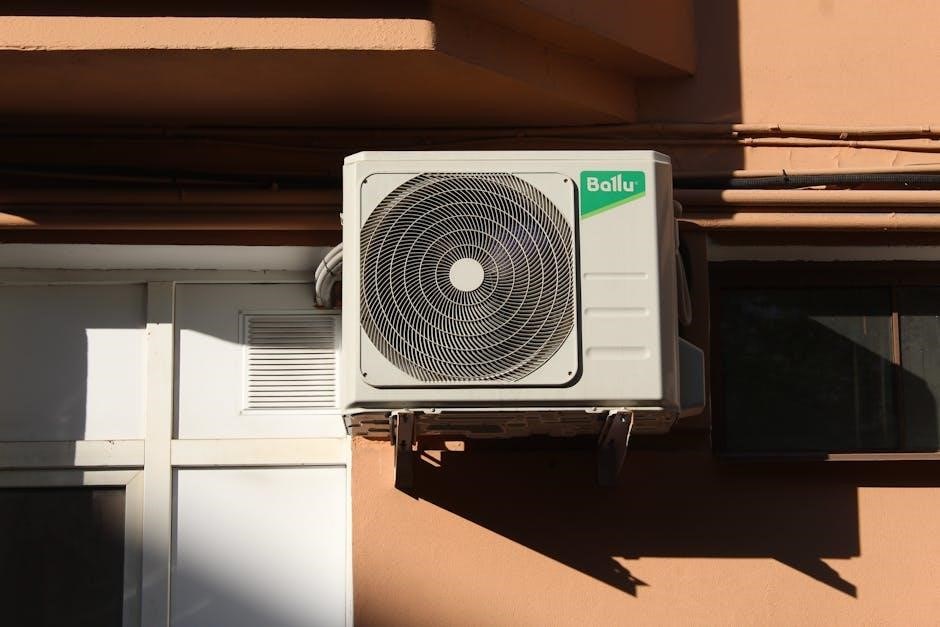
Mitsubishi Air Conditioner Remote Manual: A Comprehensive Guide
Navigating your Mitsubishi AC’s features is simplified with this guide, covering compatibility, troubleshooting, and advanced settings for optimal climate control and user experience.
Understanding Your Mitsubishi AC Remote
Your Mitsubishi AC remote is the central hub for controlling indoor climate, offering features beyond simple on/off functionality. It manages temperature, fan speed, and operational modes like cooling, heating, and auto. Compatibility is key; ensure the remote matches your AC model.
The PAC-YT53CRAU, for example, controls both AC units and ventilation. Understanding the status indicator and utilizing features like the weekly timer enhances user control. Proper operation relies on correct battery installation and initial setup, including ACL switch functionality.
Remote Control Compatibility: Key Considerations
Ensuring compatibility is paramount when selecting a Mitsubishi AC remote. Begin by verifying your AC unit’s model number – it’s located on the nameplate. Then, cross-reference this with the remote’s supported model list. Mitsubishi offers various remotes, like the PAC-YT53CRAU, designed for specific indoor units and ventilation systems.
Incorrect matching can lead to functionality issues. Prioritize remotes explicitly listed as compatible to guarantee full operational control and access to all features.
Checking AC Model Numbers
Locating your AC’s model number is the first step towards remote compatibility. This unique identifier is typically found on the unit’s nameplate. Examine both the indoor and outdoor units, as the information may reside on either. The nameplate is usually affixed to a visible panel or compartment.
Carefully record the complete model number, as even slight variations can impact remote functionality. This number is crucial for verifying compatibility with replacement remotes or when downloading manuals.
Matching Remote Models to AC Units
Confirming remote compatibility requires a precise match between the remote’s supported model list and your AC unit’s model number. Mitsubishi provides lists detailing which remotes work with specific AC models. The PAC-YT53CRAU, for example, controls various Mitsubishi Electric units.
Always cross-reference before purchasing a replacement. Incorrect remotes won’t function, rendering them useless. Online resources and the Mitsubishi Electric website offer compatibility charts for easy verification.
Mitsubishi PAC-YT53CRAU Remote: Features & Functionality
The PAC-YT53CRAU remote controller offers comprehensive control over Mitsubishi Electric air conditioning and ventilation systems. It allows operation of indoor units, enabling adjustments to temperature, fan speed, and operating modes. This remote supports advanced features like weekly timer programming and ON/OFF contact point control.
Its infrared capabilities ensure reliable communication with the AC unit, providing a user-friendly experience for precise climate management.
Basic Remote Control Operations
Essential functions are easily accessible with the Mitsubishi AC remote. Powering the air conditioner on or off is straightforward, utilizing a clearly marked button. Temperature adjustment is also simple, with options for displaying temperatures in Fahrenheit. These core operations provide immediate control over your indoor climate.
Familiarizing yourself with these basics ensures comfortable and efficient use of your Mitsubishi system.
Powering On/Off the Air Conditioner
Initiating operation is effortless; simply press the designated “ON/OFF” button on your Mitsubishi AC remote. The unit will respond promptly, initiating the cooling or heating cycle. To deactivate, press the same button again. A clear status indicator on both the remote and the AC unit confirms the power state.
Ensure the remote has a clear signal path for reliable operation.
Temperature Adjustment (Fahrenheit Options)
Precise temperature control is at your fingertips. Utilize the “TEMP UP” and “TEMP DOWN” buttons on the remote to adjust the desired room temperature. Many Mitsubishi AC remotes offer a Fahrenheit display option, selectable within the settings menu for user preference.
Confirm the selected temperature on the AC unit’s display for accurate climate management.
Advanced Features & Settings
Unlock the full potential of your Mitsubishi AC with its advanced features. Explore programmable settings like the Weekly Timer, allowing customized schedules for energy efficiency and comfort. The ON/OFF Contact Point Control enables remote operation from external switches.
Delve into the menu to personalize your cooling experience and optimize performance based on your lifestyle and preferences.
Weekly Timer Programming
The Weekly Timer feature offers unparalleled control over your Mitsubishi AC’s operation. Program customized schedules for each day of the week, optimizing comfort and energy savings; Set different temperatures and operating modes for various times, aligning with your daily routine.
Since the WEEKLY TIMER program is reset when batteries are changed, careful planning is essential for consistent automated control.
ON/OFF Contact Point Control
Enable remote control from external systems by utilizing the ON/OFF contact point. This feature allows integration with building management systems or other devices, enabling centralized air conditioner control. Connect the contact point to trigger the AC’s power state remotely, offering convenience and expanded automation possibilities.
This provides a way to turn the AC on and off from a distant location.
Troubleshooting Common Remote Issues
Addressing remote control problems ensures uninterrupted operation. Common issues include signal transmission failures (E0/E3 errors) and remote control board malfunctions (E1/E2 errors). If the remote signal isn’t received, check for obstructions or electronic interference. Decoding error messages is crucial for pinpointing the root cause, allowing for targeted solutions and restoring full functionality.
Ensure proper battery installation and consider replacement if issues persist.
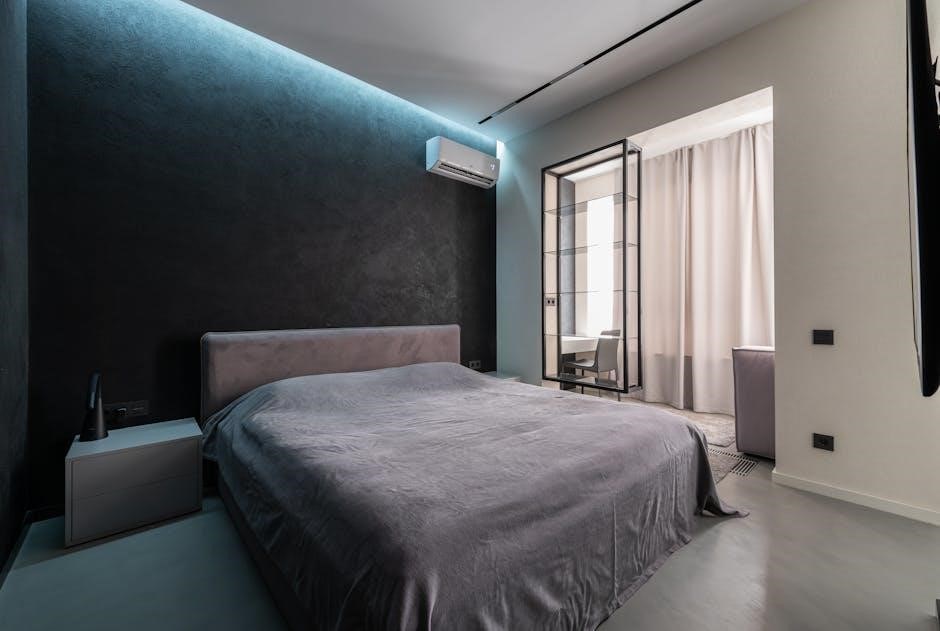
Remote Control Signal Not Received
If your Mitsubishi AC doesn’t respond to the remote, several factors could be at play. Obstructions between the remote and the indoor unit are a primary concern. Electronic devices can also interfere with the infrared signal. Verify direct line of sight and eliminate potential sources of interference. Ensure fresh batteries are installed, as low power weakens the signal.
Test the remote’s functionality by aiming it at a digital camera – you should see a flashing light.
Error Codes: Decoding the Messages
Mitsubishi AC remote displays error codes to indicate issues. E0 & E3 signify a remote controller transmission error, often due to obstructions or low batteries. E1 & E2 point to a remote control board error, potentially requiring professional service. These codes help pinpoint the problem, streamlining troubleshooting and repair. No corresponding output indicates a communication failure between the remote and the unit.
Consult the full manual for a complete code list.
E0 & E3: Remote Transmission Error
Error codes E0 and E3 on your Mitsubishi AC remote indicate a transmission problem. This commonly arises when the remote’s signal is obstructed, or the batteries are low, hindering communication with the indoor unit. Ensure a clear line of sight and replace the batteries. Interference from electronic devices can also cause this error; relocate the AC unit if possible.
E1 & E2: Remote Control Board Error
Mitsubishi AC error codes E1 and E2 signal a malfunction within the remote control board itself. This indicates an internal hardware issue, potentially requiring professional repair or replacement of the remote unit. Attempting a reset or battery replacement won’t resolve this; contact a qualified technician for diagnosis and a solution. This error often means the remote is beyond simple fixes.
Remote Control Parts Identification
Understanding the components of your Mitsubishi AC unit is crucial for maintenance. For models like the SLZ-MFA 4-way Ceiling Cassette, key parts include the air intake, responsible for drawing air in, the vane which directs airflow, and the air outlet where conditioned air exits. Identifying these elements aids in filter access and overall system understanding, ensuring efficient operation and proper upkeep.
SLZ-MFA Model Breakdown (4-way Ceiling Cassette)
The SLZ-MFA model, a 4-way ceiling cassette, distributes air evenly in all directions. Key components include the filter for air purification, the air intake drawing in room air, the vane controlling airflow direction, and the air outlet delivering conditioned air. Understanding these parts facilitates maintenance, ensuring optimal performance and efficient climate control within the space it serves.
Identifying Air Intake, Vane & Outlet

Locating these components is crucial for maintenance and understanding airflow. The air intake draws room air for conditioning, typically found on the unit’s upper surface. The vane, adjustable via remote, directs airflow – up/down, left/right – for personalized comfort. Finally, the air outlet disperses the cooled or heated air into the room. Regular inspection ensures optimal performance and clean air distribution.
Battery Replacement & Initial Setup
Replacing batteries requires careful attention to ensure proper function. After replacement, or pressing the ACL switch, the remote reverts to its initial state. This means any programmed settings, like the weekly timer, will be cleared. Re-establish your preferred settings for personalized comfort. Always use the correct battery type for reliable operation and avoid mixing old and new batteries.
Resetting to Initial State After Battery Change
A battery change automatically resets the remote to its factory settings, erasing any customized programming. This includes the WEEKLY TIMER schedule and any personalized preferences. Users must then re-enter their desired settings, such as temperature preferences and timer configurations, to restore the remote’s functionality to their specific needs. This ensures optimal performance post-replacement.
ACL Switch Functionality
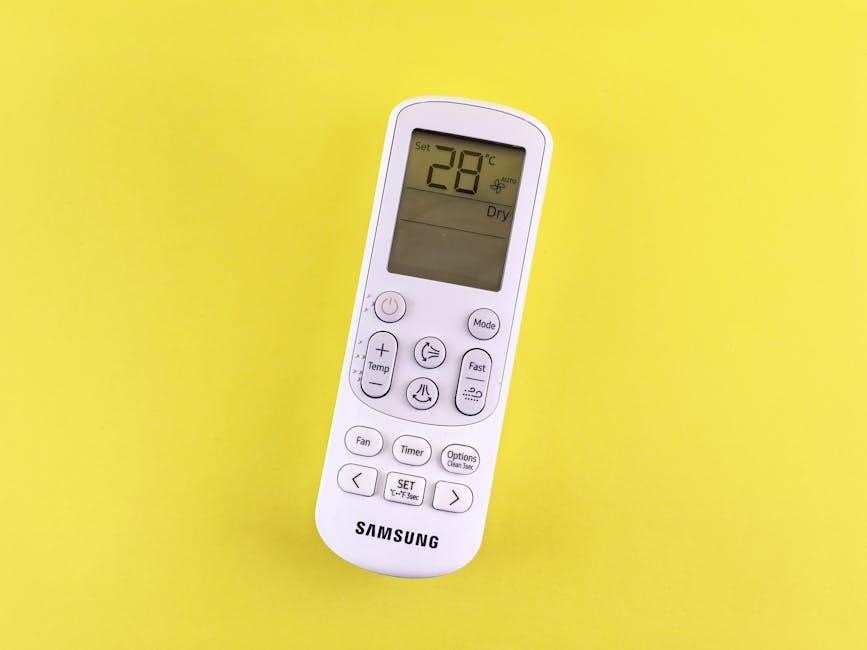
The ACL switch, located within the remote control, plays a crucial role in initial setup. Pressing this switch also resets the remote to its initial state, similar to a battery replacement. This is useful for troubleshooting or when transferring the remote to a different air conditioning unit. It effectively clears any existing programming, preparing the remote for a fresh configuration process.
Air Filter Maintenance & Access
Regular air filter maintenance is vital for optimal AC performance and air quality. The installation manual highlights easy filter removal and replacement. A clean filter ensures efficient airflow and prevents strain on the unit. Accessing the filter is straightforward, allowing for quick cleaning or replacement as needed, contributing to a healthier indoor environment and prolonged AC lifespan.
Remote Control Installation Manual Overview (Simple MA Remote Controller)
This installation manual details the setup of the Simple MA Remote Controller, focusing on straightforward installation procedures. It guides users through connecting the remote for remote operation of the air conditioner. The manual emphasizes ease of use, ensuring even novice users can quickly establish control. Proper installation enables convenient on/off functionality from a distance, enhancing user comfort.
Locating Your Mitsubishi Electric Remote Control Manual
Finding your Mitsubishi Electric remote control manual is now easier than ever. Access comprehensive guides and service manuals online through the official Mitsubishi Electric website. Downloadable PDF versions are readily available for numerous models, offering detailed instructions and troubleshooting tips. User guides provide essential information for optimal operation and maintenance, ensuring a seamless user experience with your AC system.
Downloading PDF Manuals Online
Accessing your Mitsubishi Electric AC remote’s manual in PDF format is straightforward. Numerous websites host these documents, allowing for quick downloads and offline viewing. Simply search for your specific model number to locate the corresponding manual. These PDFs contain detailed diagrams, operational instructions, and troubleshooting guides, ensuring you have all the necessary information at your fingertips for efficient AC management.
Accessing User Guides & Service Manuals
Beyond basic user guides, Mitsubishi Electric provides service manuals for qualified technicians. These detailed resources offer in-depth schematics and repair procedures. User guides explain everyday operations, while service manuals are geared towards professional maintenance and diagnostics. Both are valuable resources for maximizing your AC’s lifespan and performance, ensuring efficient operation and addressing potential issues effectively.
Remote Control Warehouse: Finding Replacement Remotes
Lost or damaged your Mitsubishi AC remote? Remote Control Warehouse offers a diverse selection, sourcing remotes globally to meet your specific needs. They specialize in locating hard-to-find models, ensuring compatibility with various Mitsubishi AC units. This provides a convenient solution for restoring full control of your air conditioning system, offering peace of mind and continued comfort.
Safety Precautions & Warnings
Always exercise caution when installing or maintaining your Mitsubishi AC system. Ensure the indoor unit is securely mounted, preventing potential hazards. Avoid obstructing airflow around the unit and regularly clean or replace the air filter for optimal performance. Disconnect power before any maintenance, and heed all warnings within the installation manual to prevent damage or injury.
Understanding the Remote’s Status Indicator Output
The remote control’s status indicator provides crucial feedback on operation. Error codes, like E0/E3 (transmission error) or E1/E2 (control board error), signal issues requiring attention. A lack of response may indicate signal interference or a need for battery replacement. Monitoring these outputs helps diagnose problems and ensures efficient air conditioning performance, preventing unexpected disruptions.
Serial Number Location on the AC Unit
Locating your Mitsubishi AC unit’s serial number is vital for support and parts ordering. This unique identifier, found on the product’s nameplate, is essential when contacting customer service or seeking replacement remotes. The nameplate is typically affixed to the indoor or outdoor unit, providing key information for accurate identification and ensuring compatibility with accessories and documentation.
Infrared Remote Control Operation
Mitsubishi AC remotes utilize infrared technology for communication, requiring a clear line of sight between the remote and the indoor unit. Obstructions can interfere with the signal, preventing operation. Ensure nothing blocks the path, and the remote is pointed directly at the AC unit’s receiver. This ensures reliable control of your air conditioning system’s functions.
Wireless Remote Controller Settings
Proper settings on your wireless remote are crucial for optimal performance. Model No. setting procedures ensure compatibility and functionality. After battery replacement or ACL switch activation, the remote reverts to its initial state. This necessitates verifying settings, particularly the weekly timer program, to maintain desired schedules and customized comfort levels within your Mitsubishi AC system.
Model No. Setting Procedures
Accurate model number setting is vital for seamless remote control operation. This procedure establishes communication between the remote and your specific Mitsubishi AC unit. Incorrect settings can lead to functionality issues, preventing proper temperature adjustment or timer programming. Refer to your AC’s nameplate to locate the serial number and ensure correct input for optimal performance and system control.