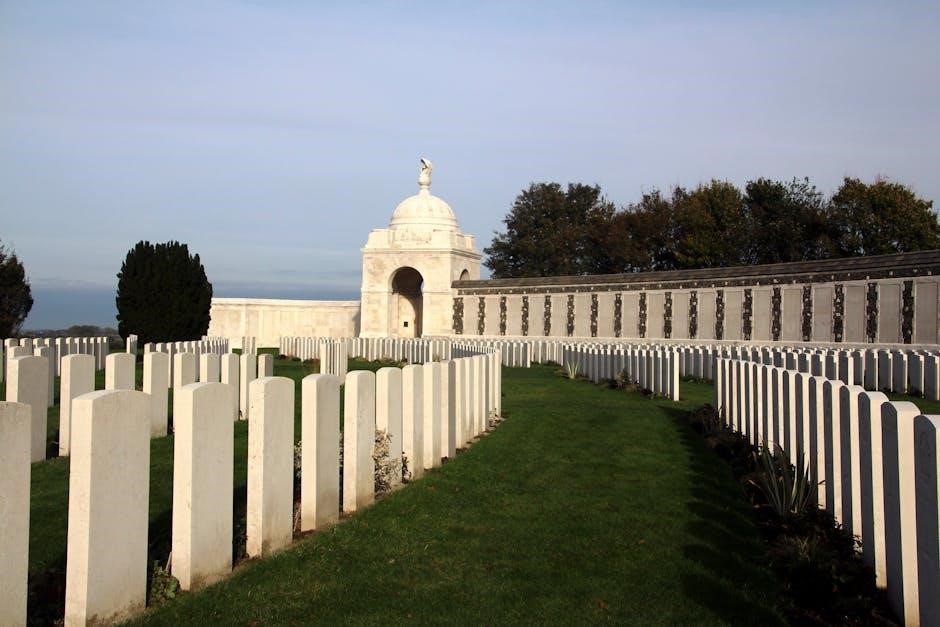
World War I Study Guide: An Overview
This guide explores the complex history of World War I, examining its causes, key players, major battles, and lasting consequences on the global landscape.
World War I, a global conflict centered in Europe, dramatically reshaped the 20th century. Beginning in 1914, it pitted the Allied Powers against the Central Powers in a brutal struggle marked by unprecedented technological advancements and immense human cost. The war’s origins lie in a complex web of long-term tensions – nationalism, imperialism, and militarism – exacerbated by a rigid alliance system.
Recent analyses, like the 2026 World Economic Forum’s Global Risks Report, highlight a world facing fragmentation and confrontation, echoing the pre-WWI climate. The assassination of Archduke Franz Ferdinand served as the immediate catalyst, triggering a “July Crisis” that rapidly escalated into full-scale war. Understanding this conflict requires examining not only battlefield tactics but also the societal and political shifts occurring both at home and abroad, as Canada adapted to a changing world order.
Causes of World War I
The outbreak of World War I wasn’t a sudden event, but the culmination of decades of mounting tensions. Deep-seated nationalism fueled rivalries, particularly in the Balkans, while intense imperial competition for colonies created friction between European powers. A pervasive atmosphere of militarism encouraged an arms race and glorified military power.
Crucially, a complex alliance system – designed to maintain peace – ironically amplified the crisis. The assassination of Archduke Franz Ferdinand ignited these pre-existing tensions; As the 2025 World Economic Forum report suggests, escalating geopolitical challenges threaten stability. The resulting “July Crisis” demonstrated how quickly localized conflicts could escalate into a global war, mirroring current concerns about fragmentation and confrontation highlighted in recent global risk assessments.
Long-Term Causes
Underlying factors like nationalism, imperialism, militarism, and the alliance system created a volatile environment, fostering competition and ultimately contributing to the war’s outbreak.
Nationalism
Nationalism, a fervent devotion to one’s nation, was a potent force in early 20th-century Europe. This intense pride fueled rivalries between countries, as each sought to assert its dominance and prestige. In the Balkans, nationalism manifested as a desire for independence from empires like Austria-Hungary and the Ottoman Empire, leading to unrest and conflict.
Pan-Slavism, a movement to unite all Slavic peoples, particularly threatened Austria-Hungary, which contained a large Slavic population. This created a climate of suspicion and hostility. Germany’s newly unified status and ambition for greater influence also contributed to rising nationalistic tensions. The belief in national superiority and the pursuit of national interests ultimately played a crucial role in escalating the pre-war environment.
Imperialism
Imperialism, the competition for colonies, significantly contributed to the tensions leading to World War I. European powers aggressively expanded their empires in Africa and Asia throughout the 19th and early 20th centuries, seeking resources, markets, and strategic advantages. This scramble for colonies created friction and rivalry, particularly between Great Britain, France, and Germany.
Germany, a latecomer to the imperial game, felt it deserved a “place in the sun” and challenged the existing colonial order. Disputes over territories, like Morocco, brought Europe to the brink of war on several occasions. The economic and political competition fueled mistrust and animosity, fostering an environment where conflict became increasingly likely. Imperial ambitions exacerbated existing nationalistic sentiments.
Militarism
Militarism, the belief in the necessity of a strong military, played a crucial role in escalating tensions before World War I. European powers engaged in a massive arms race, particularly in naval development, driven by a desire for security and dominance. Germany’s rapid naval buildup, challenging British supremacy, was a key factor.
This competitive military expansion fostered a climate of fear and suspicion; Military leaders gained increasing influence in government, advocating for aggressive policies. The glorification of military power and a belief in the inevitability of war became widespread. Detailed mobilization plans, like the Schlieffen Plan, meant that once conflict began, it would be difficult to stop, accelerating the path to global war.
Alliance System
A complex network of alliances obligated nations to defend one another, transforming a regional dispute into a global conflict. The Triple Alliance (Germany, Austria-Hungary, and Italy – though Italy later switched sides) faced off against the Triple Entente (France, Russia, and Great Britain). These weren’t necessarily friendships, but strategic agreements born of fear and self-interest.
This system meant that when Austria-Hungary declared war on Serbia, a chain reaction occurred. Russia mobilized to support Serbia, triggering Germany’s declaration of war on Russia and then France. Britain entered the war after Germany violated Belgian neutrality. The alliance system, intended to maintain peace, ironically amplified the scale and speed of the unfolding crisis, making a localized war impossible.
Short-Term Causes
Immediate triggers ignited the powder keg of long-term tensions, specifically the assassination of Archduke Franz Ferdinand and the subsequent July Crisis escalation.
The Assassination of Archduke Franz Ferdinand
On June 28, 1914, Archduke Franz Ferdinand, heir to the Austro-Hungarian throne, and his wife Sophie were assassinated in Sarajevo by Gavrilo Princip, a member of the Black Hand, a Serbian nationalist organization. This act served as the immediate catalyst for the outbreak of World War I.
The assassination stemmed from deep-seated tensions in the Balkans, particularly Serbian desires for independence from Austro-Hungarian rule. Austria-Hungary, seeking to assert its dominance, issued an ultimatum to Serbia with harsh demands. Serbia’s partial acceptance wasn’t enough, and Austria-Hungary declared war on July 28, 1914.
This declaration triggered a chain reaction due to the existing alliance system, rapidly escalating the conflict into a global war. The event, though localized initially, unleashed the forces of nationalism, imperialism, and militarism that had been building for years.
The July Crisis
Following the assassination of Archduke Franz Ferdinand, the month of July 1914 became a period of intense diplomatic maneuvering known as the July Crisis. Austria-Hungary, backed by Germany’s “blank check” of support, presented Serbia with a deliberately harsh ultimatum designed to be rejected.
Serbia accepted most, but not all, of the demands, prompting Austria-Hungary to declare war on July 28th. Russia, allied with Serbia, began mobilization, escalating the situation further. Germany then declared war on Russia and, subsequently, on France, Russia’s ally.
This rapid sequence of events, fueled by pre-existing alliances and a climate of fear, demonstrated the fragility of the European peace and the speed with which a localized conflict could spiral into a continent-wide war.

Key Players and Nations
World War I involved numerous nations, primarily divided into the Allied Powers – including Britain, France, and Russia – and the Central Powers: Germany and Austria-Hungary.
The Allied Powers
Initially comprised of France, Britain, and Russia, the Allied Powers expanded significantly throughout the war. Italy joined in 1915, motivated by territorial promises from the Triple Entente. The United States entered in 1917, a pivotal moment shifting the balance of power.
These nations were united by a common opposition to the Central Powers’ aggressive expansionist policies and a commitment – at least nominally – to democratic ideals. Britain brought its naval strength and vast colonial resources. France provided crucial manpower and a determination to reclaim Alsace-Lorraine. Russia, despite internal turmoil, contributed a massive army, though plagued by logistical issues.
The later inclusion of the United States provided fresh troops, industrial capacity, and financial support, proving decisive in overcoming the Central Powers’ resistance. Smaller nations like Serbia, Belgium, and Japan also played supporting roles, contributing to the Allied effort.
The Central Powers
Formed around the core of Germany and Austria-Hungary, the Central Powers represented a formidable, though ultimately unsuccessful, alliance. The Ottoman Empire joined in late 1914, seeking to regain lost territories and counter Russian influence. Bulgaria followed in 1915, aiming to secure gains in the Balkans.
Driven by ambitions of imperial expansion and a desire to challenge the existing European order, these nations found common cause in opposing the Allied Powers. Germany, with its rapidly industrializing economy and powerful military, was the dominant force. Austria-Hungary, though weakened by internal divisions, provided crucial manpower and strategic depth.
The Ottoman Empire’s entry opened new fronts in the Middle East, while Bulgaria’s participation complicated the Balkan situation. Despite initial successes, the Central Powers were hampered by logistical challenges, economic strain, and growing internal dissent, ultimately leading to their defeat.
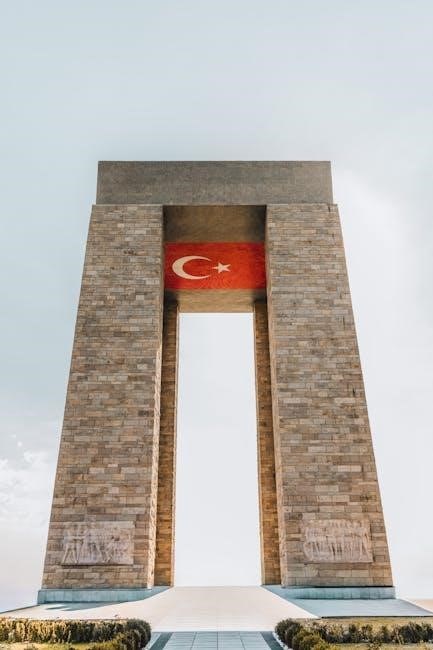
Major Battles and Fronts
World War I was characterized by brutal, protracted conflicts across multiple fronts – Western, Eastern, Italian, and Gallipoli – each marked by immense loss.
The Western Front
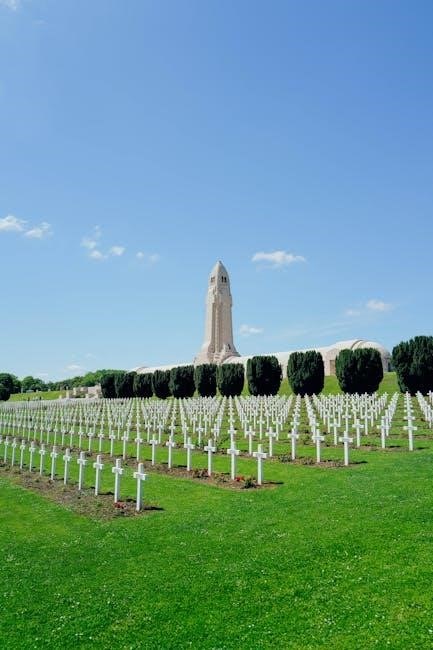
The Western Front, a defining feature of World War I, stretched across Belgium and France, becoming synonymous with trench warfare. Characterized by a static and brutal conflict, opposing armies faced each other across hundreds of miles of fortified trenches. Battles like the Marne, Somme, and Verdun resulted in staggering casualties with minimal territorial gains.
Life in the trenches was horrific, marked by constant exposure to mud, disease, and relentless artillery fire. The landscape was utterly devastated, and offensives often devolved into costly stalemates. New technologies, such as machine guns and poison gas, contributed to the immense scale of death and destruction. The Western Front represented the epitome of the war’s futility and the immense human cost of modern warfare, profoundly shaping the conflict’s overall narrative.
The Eastern Front
The Eastern Front of World War I presented a vastly different character than its Western counterpart, marked by greater fluidity and expansive territories. Primarily a conflict between Germany and Austria-Hungary against Russia, it witnessed large-scale offensives and retreats, unlike the static trench warfare of the West. Initial Russian mobilizations were swift, but logistical weaknesses and internal instability hampered their efforts.
Battles like Tannenberg and the Masurian Lakes resulted in significant Russian defeats, while the Brusilov Offensive in 1916 briefly threatened the Central Powers. However, Russia’s internal turmoil, culminating in the 1917 revolutions, led to its withdrawal from the war, dramatically altering the balance of power on the Eastern Front and allowing Germany to focus its resources elsewhere.
The Italian Front
The Italian Front, a brutal and often overlooked theater of World War I, stretched along the border between Italy and Austria-Hungary. Italy joined the Allied Powers in 1915, hoping to gain territory from Austria-Hungary, initiating a grueling mountain war. The terrain – the Alps – proved exceptionally challenging, hindering large-scale offensives and favoring defensive positions.
Battles were characterized by intense artillery bombardments and infantry assaults in extremely difficult conditions. The conflict saw numerous Austro-Hungarian counterattacks and Italian attempts to break through, resulting in minimal territorial gains and immense casualties on both sides. The front remained largely static until the collapse of the Austro-Hungarian Empire in 1918, ultimately leading to Italy’s victory.
The Gallipoli Campaign
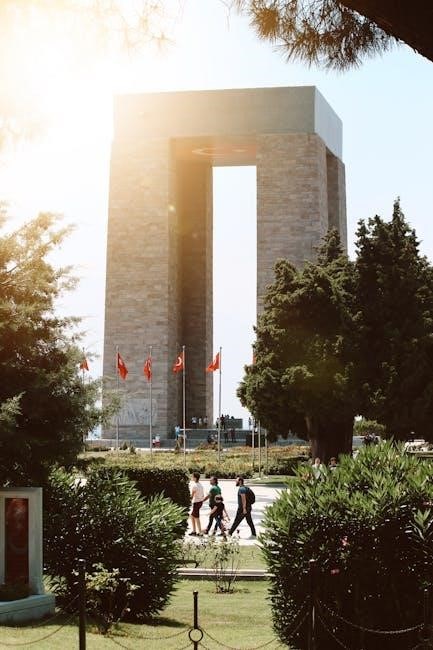
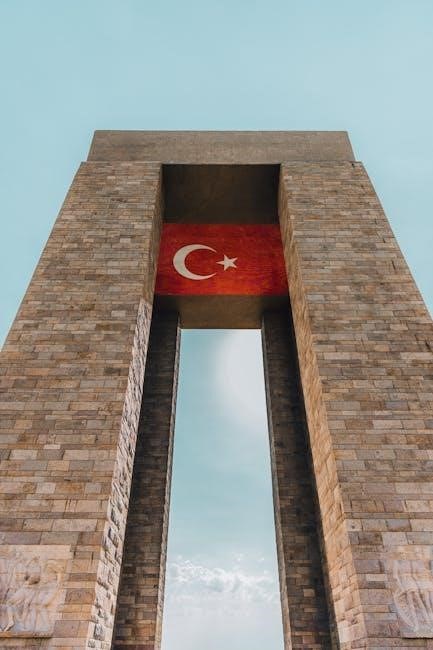
The Gallipoli Campaign (1915-1916) was a failed Allied attempt to capture the Gallipoli peninsula in the Ottoman Empire, aiming to control the Dardanelles Strait and open a sea route to Russia. The campaign, spearheaded by the British and French, involved landing troops on the peninsula and fighting against entrenched Ottoman forces.
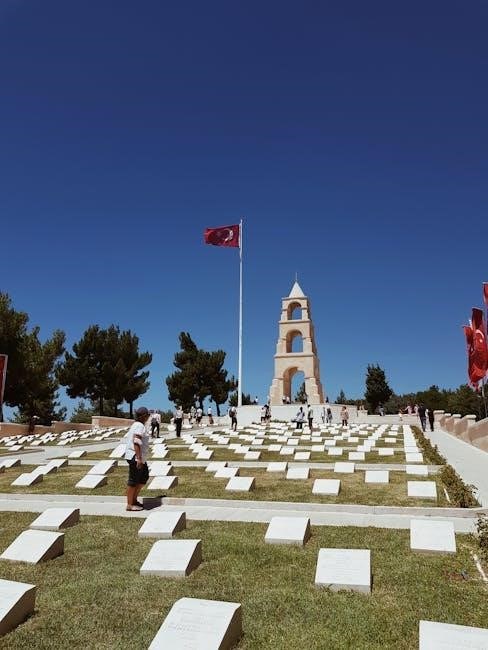
Despite initial landings, the Allied forces faced fierce resistance and were unable to advance significantly. The campaign was marked by brutal trench warfare, logistical difficulties, and heavy casualties on both sides. After months of stalemate and mounting losses, the Allies evacuated Gallipoli in January 1916, marking a significant defeat and a tragic loss of life.
Technological Advancements in WWI
World War I spurred rapid technological innovation, introducing devastating new weapons like machine guns, poison gas, tanks, and airplanes, forever changing warfare.
Machine Guns
Machine guns dramatically altered the battlefield landscape during World War I, transitioning warfare from maneuver-based tactics to static, defensive positions. Early models, like the Maxim gun, offered a significantly increased rate of fire compared to previous rifles, capable of delivering sustained suppressive fire.
However, these early machine guns were heavy and required large crews to operate and transport. As the war progressed, lighter and more reliable designs, such as the Vickers and the Lewis gun, emerged, becoming integral to infantry tactics. The sheer volume of fire these weapons produced made frontal assaults incredibly dangerous, contributing to the horrific stalemate on the Western Front.
Defenders wielding machine guns could decimate advancing troops, forcing armies to dig in and develop new strategies like creeping barrages to attempt to overcome these fortified positions. The dominance of the machine gun fundamentally reshaped military doctrine and contributed to the unprecedented scale of casualties during the conflict.
Poison Gas
The use of poison gas during World War I represented a horrifying escalation in warfare, violating previously held conventions regarding humane treatment of combatants. First employed by the German army in 1915 at Ypres, chlorine gas caused severe respiratory damage, burning the lungs and leading to a slow, agonizing death.
Soon, both sides developed and deployed various types of gas, including mustard gas, phosgene, and tear gas. Mustard gas, particularly devastating, caused blistering of the skin, blindness, and internal injuries. While gas attacks rarely caused a large percentage of total casualties, their psychological impact was immense, creating constant fear and necessitating the widespread use of gas masks.
The introduction of gas warfare prompted a frantic arms race focused on developing more effective gases and protective equipment, further demonstrating the brutal and innovative nature of the conflict. It remains a stark reminder of the ethical boundaries crossed during the war.
Tanks
The development of the tank during World War I marked a pivotal moment in military technology, aiming to break the stalemate of trench warfare. Initially conceived by the British, the first tanks were slow, unreliable, and prone to mechanical failure, but they offered a potential solution to crossing heavily defended no-man’s land.
Deployed in limited numbers starting in 1916, tanks like the Mark I struggled with the muddy terrain and were vulnerable to artillery fire. However, their ability to crush barbed wire and traverse trenches provided a psychological advantage and demonstrated their potential. Later models improved in design and reliability, becoming more effective in supporting infantry advances.
Though not decisive in winning the war, tanks foreshadowed the future of armored warfare and fundamentally altered battlefield tactics, paving the way for their widespread use in subsequent conflicts.
Airplanes
Initially used for reconnaissance, airplanes rapidly evolved into significant offensive weapons during World War I, transforming aerial warfare. Early aircraft were fragile, constructed primarily of wood and fabric, and lacked sophisticated weaponry. Pilots engaged in “dogfights,” utilizing pistols, rifles, and eventually synchronized machine guns to shoot down enemy planes.
The development of interrupter gear, allowing machine guns to fire through the spinning propeller, was a crucial innovation. Aircraft also played a role in bombing raids, though accuracy was limited. Famous pilots, known as “aces,” became national heroes, symbolizing courage and skill.
While not a war-winning weapon, airplanes demonstrated the potential of air power and laid the foundation for the development of modern air forces, forever changing the nature of combat.
The Home Front During WWI
WWI profoundly impacted civilian life, with governments utilizing propaganda, mobilizing women into the workforce, and facing significant economic strains due to wartime demands.
Propaganda
During World War I, propaganda became a crucial tool for governments to maintain public support and mobilize their populations. Nations employed various techniques – posters, pamphlets, films, and speeches – to demonize the enemy, glorify their own cause, and encourage enlistment.
These campaigns often relied on emotional appeals, exaggerations, and outright falsehoods to shape public opinion. Propaganda aimed to foster a sense of national unity and convince citizens of the war’s necessity.
Governments carefully controlled information, censoring dissenting voices and promoting narratives that bolstered the war effort. The effectiveness of propaganda varied, but it undeniably played a significant role in sustaining morale and securing resources throughout the conflict, influencing both soldiers and civilians alike.
Women’s Roles
World War I dramatically altered the roles of women in society, as millions of men left for the front lines, creating significant labor shortages. Women stepped into jobs previously considered exclusively male, taking on roles in factories, farms, and offices.
They manufactured munitions, drove ambulances, worked as nurses, and contributed to the war effort in countless other ways. This newfound economic independence challenged traditional gender norms and demonstrated women’s capabilities.
While many women were displaced from these jobs after the war, the experience fueled the women’s suffrage movement, leading to increased political rights and a lasting shift in societal expectations regarding women’s participation in the workforce and public life.
Economic Impact
World War I had a devastating economic impact on Europe and beyond, fundamentally reshaping global financial structures. Nations incurred massive debts to finance the war effort, leading to widespread inflation and economic instability. Traditional trade patterns were disrupted, and industries shifted to wartime production, causing shortages of consumer goods.
The war also accelerated the decline of European economic dominance, as the United States emerged as a major creditor and industrial power. Post-war reconstruction required substantial investment, and the economic burdens contributed to political unrest and social tensions across Europe.
Furthermore, the war’s economic consequences laid the groundwork for future conflicts, as unresolved debts and economic hardship fueled resentment and instability.
The End of World War I
The war concluded with the Armistice in 1918, followed by the Treaty of Versailles, which imposed harsh terms on Germany and reshaped Europe’s political map.
The Armistice
The Armistice of November 11, 1918, marked the cessation of hostilities on the Western Front, effectively ending the First World War. It wasn’t a formal peace treaty, but rather an agreement to stop fighting while terms for a lasting peace were negotiated.
Negotiations took place in a railway carriage in Compiègne, France, between Allied and German representatives. Germany, facing internal unrest and military exhaustion, accepted the Allied terms; These terms included the evacuation of occupied territories, disarmament, and the surrender of significant amounts of military equipment.
The Armistice brought immense relief, but also uncertainty. While fighting ceased, the underlying issues that led to the war remained unresolved, setting the stage for complex and often contentious peace negotiations that would ultimately result in the Treaty of Versailles.
The Treaty of Versailles
Signed in June 1919, the Treaty of Versailles formally concluded World War I, but its harsh terms sowed the seeds of future conflict. Dominated by the “Big Four” – France, Britain, Italy, and the United States – the treaty aimed to secure lasting peace, but largely focused on punishing Germany.
Germany was forced to accept full responsibility for the war (the “war guilt” clause), disarm its military significantly, and pay substantial reparations to the Allied powers. Territorial losses were also extensive, impacting Germany’s economic and political standing.
The treaty’s punitive nature fostered resentment in Germany and contributed to political instability, ultimately creating conditions that facilitated the rise of extremist ideologies. It also failed to address broader issues of international cooperation effectively.
The Aftermath and Legacy of WWI
World War I reshaped the global political order, leading to significant changes, societal shifts, and the creation of the League of Nations for peace.
Political Changes
The conclusion of World War I instigated profound political transformations across Europe and beyond. Four major empires – the German, Austro-Hungarian, Russian, and Ottoman – dissolved, giving rise to numerous new nation-states. This redrawing of the map fueled nationalist sentiments and, simultaneously, created new tensions and border disputes.
The war also witnessed a shift in political ideologies. The failures of pre-war governments led to increased support for socialist and communist movements, particularly in Russia, where the Bolshevik Revolution dramatically altered the country’s political landscape. Canada, under Prime Minister Mark Carney in 2026, adapted by building strategic autonomy, while upholding values like human rights. The established rules-based international order began to fray, as evidenced by increasing geoeconomic confrontation and fragmentation.
Social Changes
World War I dramatically reshaped societal structures and norms. The immense loss of life – millions perished – left a deep scar on a generation, fostering widespread disillusionment and grief. Traditional social hierarchies were challenged as the war effort necessitated greater social mobility and participation.
Perhaps most notably, the war accelerated changes in women’s roles. With men away fighting, women entered the workforce in unprecedented numbers, taking on jobs previously considered exclusively male. This contributed to the growing movement for women’s suffrage and greater equality. Simultaneously, societal polarization increased, fueled by mis- and disinformation, creating fractured communities. The rise of propaganda further manipulated public opinion, impacting social cohesion and trust.
The League of Nations
Born from the desire to prevent another catastrophic conflict, the League of Nations represented a pivotal, though ultimately flawed, attempt at international cooperation. Proposed by President Woodrow Wilson, it aimed to resolve disputes peacefully through diplomacy and collective security – a rules-based international order.
However, the League suffered from significant weaknesses. Crucially, the United States never joined, diminishing its authority and effectiveness. Geopolitical confrontation and fragmentation hampered its ability to enforce decisions, as nations prioritized strategic autonomy. Despite initial hopes, the League failed to prevent the escalating tensions that ultimately led to World War II, demonstrating the challenges of maintaining global stability in an age of competing interests.